From Roots to the Future: Planting Mangroves in Jawai Tengaran to Restore Coastal Ecosystems
A collaborative effort between CAN and local communities in Kalimantan to restore coastal ecosystems and strengthen environmental sustainability
4/14/20263 min read
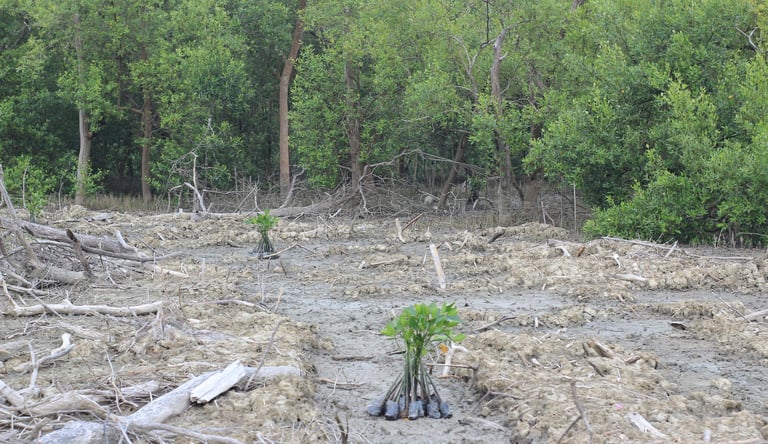
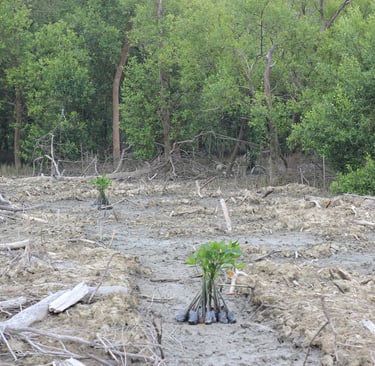
Along the coastal landscape of Jawai Tengaran, Kalimantan, mangrove expanses are more than just natural scenery, they also represent a space of hope that slowly being restored. In Sarang Burung Danau Village, located within the Tanjung Baharu Protected Forest, environmental restoration efforts are being carried out as a nature-based solution to sustainability. This area plays a vital role as a natural coastal defense while also supporting diverse species, making it a key focal point in landscape-based conservation initiatives
Deforestation landscape of Jawai Tengaran, Kalimantan
INVOLVEMENT OF LOCAL FARMER’S GROUP
Behind this initiative lies the active role of local farmer groups, who serve as the primary drivers on the ground. Their involvement goes beyond technical participation but it also reflects a genuine community-based approach that places local people at the center of safeguarding their own ecosystems. Through this collaboration, the restoration process is not only focused on ecological outcomes, but also on strengthening local capacity and fostering a deeper sense of environmental stewardship and sustainability
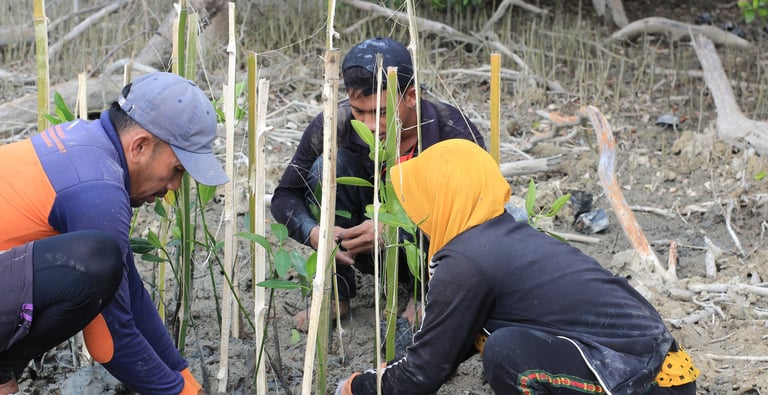
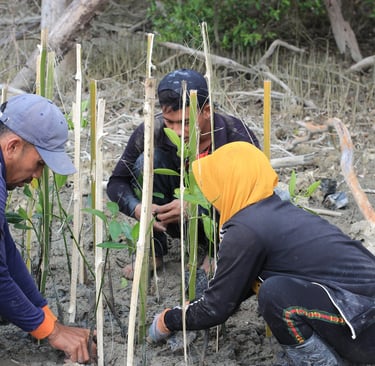
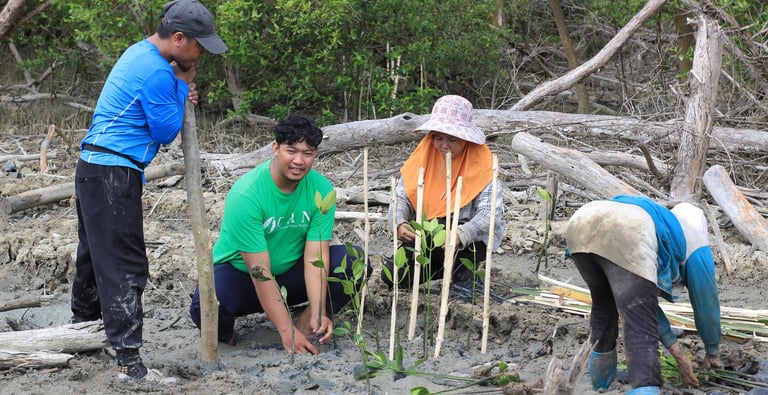
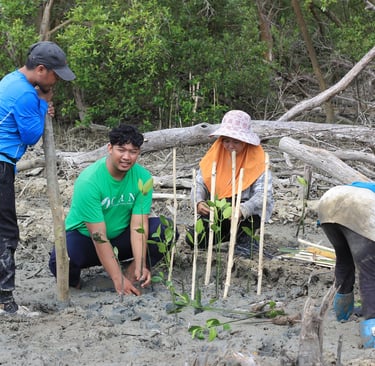
Collaboration between CAN and local farmer
SEEDS OF HOPE PLANTED
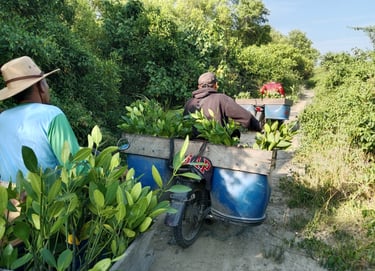
The species Rhizophora Mucronata stand as a tangible symbol of this restoration effort. This species was selected for its high adaptability to muddy coastal conditions and its effectiveness in mitigating coastal abrasion. The seedlings were sourced from Mempawah Regency through the Mempawah Mangrove Park community, before being transported overland to Jawai district. Upon arrival in Sarang Burung Danau Village, the seedlings were directly distributed to the planting sites, marking the beginning of a long-term ecosystem recovery process that will continue to grow over time.
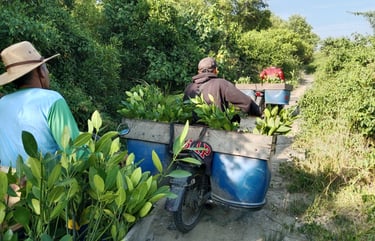
Prior to the planting process, the community worked collectively to prepare the stake made from locally sourced bamboo, which would serve to support the mangrove seedlings. This process was carried out in groups, reflecting the strong spirit of collaboration at the community level. Once completed, the bamboo stakes were transported by motorcycle to the planting sites, adapting to the area’s limited accessibility. This stage played a crucial role in ensuring that each seedling would have adequate support to grow optimally.
Transportation of mangrove seedlings from Mempawah Mangrove Park
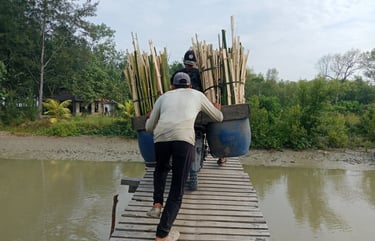
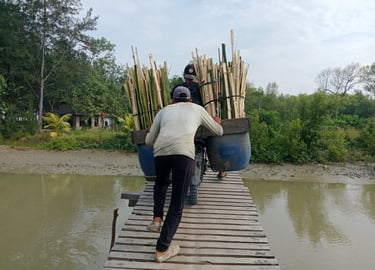
Transportating bamboo to support mangrove stems
Planting was carried out in still-wet mangrove areas, a strategy aimed at increasing seedling survival rates. Using a cluster planting method. This approach not only enhances resilience against currents and waves but also creates natural protection among the plants themselves. From the small roots that are being planted today, hopes grow for a more resilient coastal future that is guarded, cared for, and owned together by the community.
The planting of mangrove trees is expected to improve the quality of the coastal ecosystem in the Jawai Tengaran area. Mangroves not only play a role in preventing abrasion and seawater intrusion but also serve as a vital habitat for various species and a natural carbon sink, contributing to climate change mitigation.
Moreover, active community involvement is the main foundation for maintaining the sustainability of this program. From the mangrove roots planted today, hopes grow for a more resilient, sustainable, and sustainably managed coastal future for future generations.